Showing posts with label 1001 Books You Must Read Before You Die. Show all posts

Wednesday, 13 February 2013

Thursbitch ~ Alan Garner


I have been meaning to read Thursbitch for quite some time, but as I had read somewhere that it was difficult to read it made its way to the back of my list. When I finally got it from the library I was astonished to see that it was only 158 pages long.

I will ignore references to ‘difficult reads’ in future as I may never have bothered with this fantastic little novella.  It was wonderful, I couldn't put it down, and I wished so much that I was there in the valley of Thursbitch, which was brought to life so vividly by Garner.

There are two intersecting narratives, one set in the 18th century and another set in the present day.  At first the reader is tantalised by a mystery – in 1755 a packman by the name of John Turner is found dead in a snow storm with the print of a woman’s shoe by his side. Then we are introduced to Ian and Sal, who we believe are married, or are lovers, as they trek through Thursbitch discussing the geological formations.  We are tantalised by the names of the standing stones, the eerie atmosphere, and unexplained sights and sounds.  As the story progresses, you find yourself turning back to the first few pages to read them again and it all starts to make sense; though Ian and Sal are not what you thought they were, and the reason why they return to the valley leaves an emotional charge which is very affecting.

I loved the way this was written, the dialogue for the scenes set in the 18th Century are written in the local Cheshire dialect of the time, and the dialogue between Ian and Sal feels so natural and real it’s not like you are reading a novel at all.

Outstanding, I loved it!

Maxine

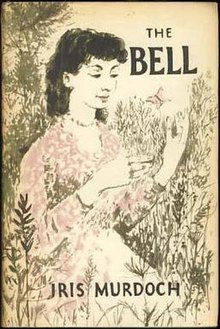
The Bell ~ Iris Murdoch


This is my third Iris Murdoch read.  I thoroughly enjoyed the satirical A Severed Head and the hilarious The Sea, The Sea, so when I picked up The Bell and read the blurb I was expecting a comedy of sorts set in a religious community.  What I got, however, was a totally different kind of read with The Bell being more about dysfunctional people, flawed relationships and torn emotions. 

The novel is set in Gloucestershire at Imber Abbey, where a small lay Anglican community live and work simplyThe story opens with Dora Greenfield, a wayward mischievous woman who is returning to her marriage after an affair.  Dora’s husband Paul, an older man, loves her but no longer respects her and though she is frightened of him and his bullying ways she is more afraid of him when they are apart.  Paul is conducting research at Imber Abbey and when Dora arrives she feels like a fish out of water as whatever she does seems to contradict with what the community is about.

The novel then switches focus to the head of the community, and owner of the Imber Community house, Michael MeadeOriginally a teacher, he once had dreams of becoming a priest but these were destroyed by his affection for a boy called Nick Fawley a student at the school where he taught, and who told all to the head of the school to Michael’s shame.

The boy becomes a troubled man; a raging alcoholic who constantly threatens suicide, and who comes to stay at the lodge located across the lake from the Imber Community house.  Nick’s twin sister Catherine is a revered member of the community as she is preparing to enter the Abby as a nun (though this appears to be against her will) and it is only for this reason that Nick and his dog Murphy are tolerated – at a distance.  A situation that is torturous for Michael.

Another main character in the novel is a student called Toby Gashe who has come for a stay at Imber before going to Oxford. Michael, during a lapse of self control, kisses Toby briefly on the lips.  The story then follows Michael’s mental torment as he questions whether he has damaged Toby in the same way that he believes he has damaged Nick.  Toby is confused and upset at first but he holds no animosity towards Michael as he genuinely likes him, but to prove to himself that he is not ‘that way inclined’ he pursues Dora.

All of this takes place during an important time at Imber – the community is awaiting the delivery of a new bell.  The old bell had a legend associated with it, and the telling of it captivates Dora’s imagination so when Toby informs Dora that whilst diving in the lake he believes he has found a large bell Dora hatches a plan.  She and Toby will raise the old bell from the lake and exchange it for the new bell thereby creating a ‘miracle’ at the unveiling.  This is a major task, but with Toby’s engineering knowledge and the help of a tractor they almost succeed……..

Dora’s character was at first charming and fun, but as the novel reaches its climax you realise that yes, one of the characters was correct when they called her a ‘bitch’.  She is very self centred, using her charms only to her own advantage, and has no regard whatsoever on how the ‘miracle’ may effect those of the community.

My favourite characterisation was that of Michael Meade and the sensitive way that Murdoch dealt with his homosexuality. Consider, this novel was written in 1958 when homosexuals were whispered about, and called ‘pansies’ or ‘queers’.  Murdoch does not write of Michaels feelings towards Nick or Toby as dirty or twisted but just as a different kind of love.  It was beautifully handled.

There is something mystical about the whole novel; it has a certain haunting atmosphere about it, the dysfunctional community members, Michael’s recurring nightmare, and the legend of that ominous bell lurking in the background.  A great read indeed.

Maxine

Friday, 7 December 2012

The Brothers Karamazov ~ Fyodor Dostoevsky


The Brothers Karamazov is the story of three brothers, two women, a grotesque father, an illegitimate brother and three thousand rubles, set in a provincial town in Russia in the 1860's. 

Dimitri Karamazov was my favourite of the brothers.  He is a 'scoundrel' by his own admission and whilst he has a good, if not passionate heart, he has a temper which prevents him from doing what is right.

Alexei (Alyosha) Karamazov is the type of character I find annoying.  He is too 'good' and kind, (like a benevolent Dickens character, just a bit too good to be true) but I read that Dostoevsky had lost his 3 year old son Alyosha to epilepsy, and so he imbued Alexei with the qualities he admired and, I guess, would have wished his son to have aspired to had he lived.  The author's grief at the loss of his son is also reflected in the novel with the death of a young character, whose funeral scene I will never forget.

I felt I didn't really get to know Ivan Karamazov very well, he is the serious brother who adores the youngest (Alexei) but he carries the Karamazov chip on his shoulder for all to see.

This is one mammoth read, and I did at times feel bored with some of the philosophical passages and long speeches, and I was a bit baffled by The Grand Inquisitor until I read it a couple of times and could appreciate and agree with what Ivan was saying.  But, if you can get past the religion and philosophy this is an exciting story of lust, passion, greed and murder.

I must mention too, the characterisation of the brother's father Fyodor is wonderful.  He is a middle aged wealthy pig.  He is a lustful, disgusting and rude drunk who actually made me laugh in most of his scenes.  He is so vile I loved him! ( I wonder what this says about me, I loved Fyodor but found Alexei annoying? Maybe I just appreciate well drawn antagonists?).

There is a sort of madness attributed to all the characters I have read so far by Dostoevsky, yet you can always identify with them and their self destructive natures.  This novel was planned to be part of a greater work but was sadly never realised as Dostoevsky died just four months after its publication.  I would love to have known what he had in store for Dimitri.

 Maxine


Monday, 23 July 2012

The Mayor of Casterbridge

I loved this rags to riches to rags story so much that it will definitely feature in my all time top ten favourite books.

The Mayor of Casterbridge, Michael Henchard, is a proud, stubborn and hot tempered man.  He reacts without proper thought to future consequences, and when he reaps the rewards of his actions he his quick to blame everyone but himself.  It is only towards the end of the novel that he realises he alone brought his fate down upon himself.

Henchard was not always the man that the people of Casterbridge knew him to be.  When he was 21, and in a drunken state, he sold his wife and child by auction at a county fair.  Devastated by his actions he swears off alcohol for the next 21 years and builds a new and productive life.  But, this is a story of secrets, and the biggest secret of all is that which is held by Michael Henchard’s wife, who returns to her husband 18 years after he sold her.

This novel highlights the status of women in society and what is considered to be proper and moral conduct.  A young woman who has had a love affair with Michael Henchard falls into disgrace when she moves to Casterbridge to demand that he marry her and restore her good name.  The lower class in this small community – who seem to have the highest morals of all - conspire to bring her down.

The idea of Henchard’s wife having lived with her ‘purchaser’ out of wedlock for 18 years would probably have scandalised 19th Century readers, and there are other far reaching effects on another character in the novel which I can’t mention without introducing a plot spoiler, and so will remain un-named.

There were no wasted elements here, it is so well plotted - every action has a negative reaction.  – you find yourself running through each cause and effect, tutting along the way and thinking ‘if only he hadn’t done this in chapter so and so, then that wouldn’t have happened in this chapter…..etc’

I read Hardy’s Tess a couple of years ago and found it very sad, although beautifully written.  The Mayor of Casterbridge is told in a more straight forward manner, but he still managed to make me cry at the end!

Maxine

Tuesday, 3 July 2012

Nicholas Nickleby ~ Charles Dickens

Yet another great read from Dickens, but I did have a few problems with it.  Although apparently a good example of 19th Century comedy, I didn't really find it very funny.  Mrs Nickleby was to provide the comic relief, and undoubtably back in 1838 this type of humour was appreciated, but I found her awfully annoying.

Nicholas is not immediately likeable; he's not as selfish as Philip 'Pip' Pirrip but he's not the true gentleman that David Copperfield grew up to be.  Nicholas has a good heart; however he is very hot headed and, when it comes to defending someone's honour, he does it with violence and unable to leave it with just one blow he must pummel that person to within an inch of his life!

There are a whole host of characters and towards the end I did get a bit forgetful of who one or two of them were. I guess Wackford Squeers, the beastly conniving school master was one of my favourites and the tragic Smike.

There are plenty of cartoonish names, and the ever present benevolent gentleman, although in this case there are two (twins!), but you tend to expect this from Dickens.

The novel pretty much follows the Nickleby family after the death of Nicholas's father. The family are left destitute and so they travel to the big smoke to appeal to their wealthy relative Ralph Nickleby for assistance. Ralph is extremely unlikeable and he and Nicholas soon become sworn enemies which is the underlying theme of the whole novel. I loved the revelation of who Ralph Nickleby's son was, and the outcome of that revelation.

A very satisfying read all in all.


Maxine

Tuesday, 12 June 2012

Rebecca ~ Daphne Du Maurier

“Last night I dreamt I went to Manderley again”

Well if she did I’m surprised it wasn’t a nightmare. Honestly, the unnamed Narrator who becomes the second Mrs de Winter didn’t have a very good run at Manderley did she?
I started listening to the audiobook of Rebecca with no preconceived ideas which is always lovely. I was expecting a Bronte-esque style of novel similar to Jane Eyre, although to be honest I’m not sure why I thought that much. Perhaps that was how Mum recommended it to me?

Our narrator, travels back in time and retells of her time at Manderley. How she met Mr de Winter abroad as a young woman and marries him, how she returns to Manderley as Mrs de Winter within a year of Rebecca’s death. It seems almost as though Rebecca is a main character though she is dead throughout the story. The second Mrs de Winter can feel that shadow over her shoulder. She is convinced that when her husband is looking at her, he is thinking about how much he misses the first Mrs de Winter, that the staff when attending her are wishing they were attending Rebecca. Mrs de Winter is a shy creature, socially awkward, young, and from a different class than is usually seen at Manderley. She tries to keep things run as they have always been run, she eats of a menu chosen by Rebecca, amongst furniture chosen by Rebecca, with a husband who had chosen Rebecca.

This, up until this point is pretty much the novel I was expecting to read. Enter Mrs Danvers. Mrs Danvers is the nastiest piece of work in any piece of literature I’ve read for quite some time… Keeping in mind I just finished reading DRACULA!

Honestly when she started talking to Mrs de Winter and explaining how devoted she had been to Rebecca and how Mrs de Winter will never live up to Rebecca in anyone’s mind, especially her husbands. I wanted to push Mrs Danvers out the window myself! What a horrid creature.
The main thing I love about this story is the way that Daphne du Maurier talks about things that may have been. For example one night when Mrs de Winter has been upset and is considering not attending her own ball, she looks ahead to what would be said about her. The way the guests would talk, how the staff would sit around drinking coffee and discuss why their mistress hadn’t come downstairs, what Mrs Danvers would think. This technique was brilliant. I think it showed a great awareness from Mrs de Winter, she was no fool and as she grew up, her thoughts more accurately depicted her social standing. Rebecca takes quite a lot of twists and turns and things are not as they seem in the beginning at all. Rebecca does in a sense return, to complicate the newlywed’s marriage, and there is an inquest to get through, and some detective work on the part of our main characters. I won’t go into detail because sometimes it’s quite nice to not know what to expect. Although after reading some reviews it seems like a lot of people are made to read this in school? I wasn’t, but I’m glad to have read it now.
I have since learned that there is a Hitchcock movie adaption so I will try to get my hands on that and see how it measures up. My Mum tells me that Mrs Danvers is miscast so if that is the case, it won’t stand up at all.
If you haven’t read Rebecca already, pop off to the local second hand bookshop and give it a go. Or even better, get a copy of the BBC audiobook. You won’t be disappointed.

Tanya

The Phantom of the Opera ~ Gaston Leroux

Gaston Leroux was well known for his detective novels, and The Phantom of the Opera is written in this vein.
In the prologue Leroux states that he, himself, had come across documents and had investigated the strange occurrences at the Opera, the disappearance of the soprano Christine Daae and Erik the troubled disfigured man who lived in the labyrinthine bowels of the Opera building.
Of course none of this was true, but the story has just about become legend due to the success of the Andrew Lloyd Webber Musical. 
Erik (the Phantom) is an evil soul, with a disfigured face, but he has the voice of an angel.  Calling himself ‘The Angel of Music’ he teaches Christine Daae how to improve her singing voice, and falls desperately in love with her.  Christine, however, has another suitor in the form of a Viscount, and Erik’s extreme jealousy leads to kidnapping and murder.
This is a very sad tale, for despite the terror he puts Christine through she still has a kind of respect and affection for him.
It is written very matter of factly as if these events did indeed really happen. The novel did not sell well on publication and was out of print for a while, but it is definitely worth reading if you enjoy the gothic horror genre.

Maxine

Thursday, 7 June 2012

Blindness ~ Jose Saramago


I have been intending to write a review on this book for a few weeks now and I keep getting caught up in life and forgetting. Yesterday when I pulled up at the local supermarket I was transported back to Blindness. “The Doctor’s Wife”, the only sighted person in a sea of blind, hunting for food. It is for me the strongest visual from Blindness and such a sign of a great novel.

The first thing I love about Blindness is how much you care about the characters although you do not know a whole lot about them. They are not given names. “The Doctor” “The Girl with the Dark Glasses” etc, are only ever referred to as such.

Sitting at the traffic lights, a man is waiting for the lights to change. He looks up. He sees a bright white light and cries “I am blind”. He is “The First Blind Man” A passer-by on the street offers to take the man’s car and drive him home. He drops off “The First Blind Man” at his house to await the return of his wife. We stay with him, but later we find out the man who dropped him home stole his car… and soon after turned blind himself.

“The Wife of the First Blind Man” takes her husband to “The Doctor” he is perplexed and recommends more tests, before the night is out he has turned blind and so have the patients waiting in the waiting room along with “The First Blind Man”

This epidemic of white blindness spreads and the powers that be decide to put those who are blind along with anyone who has been in contact with them into a closed mental facility to be controlled by a branch of the army. They are separated into The Blind and The Contaminated.

I am fascinated by this post-apocalyptic style of novel. This situation of mass blindness asks a lot of humanity. When the food stops coming regularly and one ward of the facility decide to control the food in return for sex from the females of each ward, I am sickened but not surprised. This return to primal desires is brought up often in post-apocolytic novels. In King’s The Stand, a motorcycle gang block a road and capture those woman who try to cross. A blind man in The Day of the Triffids, captures a sighted woman and uses her as his sighted slave.

Would I, as a woman, be prepared to offer myself to these men in return for food for my husband? Would men who were not felons or mental patients in their normal life, turn into sexual devients because of the leadership of one inherently bad man? If I were blind, with no indication of sight returning would I even have the will to continue to live in conditions such as these? For some reason these questions fascinate me and Jose Saramago does not disappoint. The characters do not have huge amounts of back story, but you are with them every step of the way on their struggle.

Let it be noted that I read this as an audiobook – Wikipedia says “Like most works by Saramago, the novel contains many long, breathless sentences in which commas take the place of periods. The lack of quotation marks around dialogue means that the speakers’ identities (or the fact that dialogue is occurring) may not be immediately apparent to the reader.” The audiobook however was wonderfully narrated by Jonathan Davis and never felt like a translation. This book was originally publishes in Portuguese and there has also been a movie adaptation which, kids permitting, I will sit down and watch tonight and share my thoughts with you later.

If anyone is out there I’d really love some suggestions of similarly themed books to read. Earth Abides, The Stand, Day of the Triffids, The Road, Children of the Dust… I’d also love to know of any outstanding audiobooks. Jonathan Davis narrated The Earth Abides also and I thought that was fantastic. A good narrator really does make all the difference.

Tanya

Postscript: 

Well I did get to watch the movie adaption of Blindness. I watched it in 2 or 3 sittings which is the only way I ever get to watch movies and it wasn’t bad….

I am not usually a fan of Julianne Moore but she was good as the “Doctor’s wife”. As is usual with most movie adaptations there were important segments missed and it was definitely not as good as the book but considering that all but one of the cast have to play a blind person I think it was terrifically well acted and scripted.

Give it a go if you like the novel but don’t watch it instead of reading the novel!

Tanya

Wednesday, 6 June 2012

Great Expectation ~ Charles Dickens


I felt the need to do another Dickens, which is how it should be considering it is Dickens’ 200th Birthday. 

Great Expectations is more of a plot driven novel than some of his other work, and not as long as David Copperfield or Bleak House.

I did the audio book narrated by (Simon Vance) and although I enjoyed it very much I found that I kept drawing comparisons to David Copperfield and I found that I didn’t like Pip half as much as David.  Pip is a blacksmith’s boy who is told he is to come into 'Great Expectations'.  He immediately believes it to be from the dotty but wealthy Miss Haversham.

As soon as Pip receives his good news he basically doesn’t take a second glance back at his home, his village or his friends.  I didn't like that in his character at all, expecially when it meant forgetting the lovely Joe Gargery his brother-in-law and father figure.

When Pip finally receives the news of his benefactor, it comes as a bit of a shock, and worse still it looks like he’s not going to come into his money after all.  It is then he realises who his true friends are.

It’s a moral tale, and for a quick Dickens read it’s a good one.  But, for my money give me David Copperfield every time.

Maxine